Search Results

Like to listen to what goes on behind the scenes in film making or acting straight from an actor? Click here.

A Reunion Dinner with a secret to hide. Click here.

Have you taken all the modern comforts for granted? Behind every modern device there is the technology and with them comes the management and risks. Interested to find out what goes on below the hood? Click here.

Sunday, March 15, 2009

Bucky Group 40 - Rules

This week, we listened in to Barry Schwartz on "The real crisis? We stopped being wise."

.

.
Discussion:
-
Joo Hwa said that what he likes about the talk is that, "Rule number 1, there are no rules"
Someone else continued that there are always rules, but we must use our commonsense to see what is practicable. However, I think that the word "commonsense" is precisely what bureucrats are afraid of.  "Commonsense" has to be defined.
.
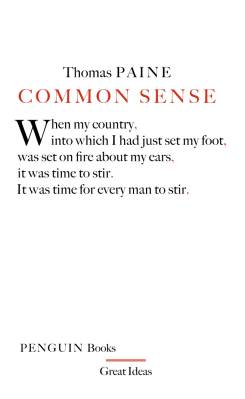
Here, Ralf brought out the book "Common Sense", written by Thomas Paine in 1776, that set off the American Revolution.  
.
Wikipedia defines 'Common Sense" as "...consists of what people in common would agree on: that which they "sense" (in common) as their common natural understanding. "


Jo brought out his experience of handling exceptions in the travel industry in that it can be used as a competitive edge. Customers take delight in having their exceptions well handled.
.
Jn replied that however, exceptions can be tedious to deal with and businesses may not like to end up spending too much time on exceptions which is a lesser occurence.
.
Jn shared her experience of her company's rules on not accepting cash from customers due to past abuse. Jn has a client that works six days a week as a food stall attendant and is too tired to go to the bank to send the money. She doesn't have cheque books and doesn't know enough English to transfer money via the ATM. In view of that, Jn accepted her cash, but ended up being hauled up by her management for breaking the rules. Jn suffered a black mark in her company, but till this day feels that it was worth breaking that rule in that instance as she put the customer first.
.
In my example as an information security policy manager in the past, we accept applications for waiver of certain policies by applications project managers. In it, they will explain why they can't follow certain policies and we will discuss and decide if we approve the waiver. Periodically, we will examine the statistics for the number of application for waivers, the number approved and determine if it is the policy that is not practical. If so, then we change the policy.
.
Jn brought out the example of the mainland Chinese buyer of the two fountain heads of a rat and a rabbit, at the recent Christie's auction, and then refused to pay for them, in order to sabotage the auction. These two fountain figurines were looted by the European occupation forces during the Ching dynasty in China. 
.
W had a young employee who on the first day suggested that she can bring her previous clientele to her. W didn't accept to do that as she thought this is not morally correct.  However, this is a standard practice in many industries. Private Banks poached senior private bankers just for their clientele. It is such an open secret that it is almost standard practice.
.
It is such a common practice that some people even childed me for being naive and impractical to stick on to some moral values. Unfortunately, some personalities of such exploits and financial successes are amplified by the media as 'heroes'. What we need are more moral heroes, not just money heroes. And this moral heroes can be just ordinary folks.
.
I have an experience with the 'auntie' selling three packs of tissue papers for one dollar at Tampines MRT station. That morning, I had only ninety cents of change and decided to just give the money to her. She refused and insisted that I take the tissue paper. I told her I couldn't do that as I had only ninety cents and not one dollar. Then she insisted that I take at least 2 packs of the tissue paper. I think she is a moral hero. Despite her visible abject poverty, she would refuse to accept charity and free money.
.
Jacy also brought up an example of someone who advised her to park her car at the higher floors instead of the more danger prone lower floors. He doesn't have to do that, but did that as his moral responsibility.  That too, is a morally heroic act.
.
To round it up, I would say that as Dr Aaron have said, if we put Love first, the things will naturally falls into place. When we put Love first, we will know which rule to break or not to break.
.

Exercise: Can you share about your experience with a moral hero or someone you know of that who is  fit to be one? Send them in as a comment. Let's start the ball rolling of recognising moral heroes.
.
.

Saturday, March 14, 2009

The Futurists 5 - Building Gods

This week we watched two videos.
The first one is "Building Gods"...

.
.
The second video is a TED talk by Pattie Maes & Pranav Mistry: Unveiling the "Sixth Sense," game-changing wearable tech...
.

Friday, March 13, 2009

Bucky Group 39 - A New Way to Think of Creativity

7 Mar 09 
This Saturday is Flip's last session with us before he return to Holland for good. Flip has been in Singapore for 20 years and has been a regular in the Bucky Group. We wish him well and I congratulate him for ending his 'double life' between the two countries.
.
After the coffee and cakes, we proceeded to watch a TED talk by Elizabeth Gilbert on "A new way to think about creativity".
.
.

.
Joo Hock introduced the De Bono's Six Thinking Hats to bring forward some structure to our discussion. It also minimise prejudgement of  a topic during discussions.
.
From Wikipedia:
The de Bono Hats system (also known as "Six Hats" or "Six Thinking Hats") is a thinking tool for group discussion and individual thinking. Combined with the idea of parallel thinking which is associated with it, it provides a means for groups to think together more effectively, and a means to plan thinking processes in a detailed and cohesive way. Read more
.
I think this tool will bring about more focus and attentiveness among us during discussions.
.
Notable note:
Someone shared the story of how a choreographer ( which is Twyla Tharp ) manage her creativity by getting inspiration from Billy Joel. 
.
One of her ways of managing her creative process is when she has a new dance to choreograph, she start a box and:
1. Write down her objective on an index card and put it into the box.
2. Research and put materials in the box.
3. Work and put materials in the box
4. Refer to the materials for inspiration.
.
.

Sunday, March 08, 2009

Daily Contemplation

Got this from my Daily Contemplation subscription...

Tolerance is giving to every other human being every right that you claim for yourself.

   --  Robert Green Ingersoll (1833-1899)

.
.

Also, out of the blue, I got this message from someone I know:

Have courage, my friend and you will break thru...
.
.

Friday, March 06, 2009

The Futurists 4 - Nanotechnology


This week's discussion is about nanotechnology. It is a topic I barely know anything about. So attending this session is just an educational trip for me. Don't despair if you feel you too have scant knowledge of the topic.
.
Here are some links which you may like to read first:
.
Nanotechnology, which is sometimes shortened to "Nanotech", refers to a field whose theme is the control of matter on an atomic and molecularscale. Generally nanotechnology deals with structures of the size 100 nanometers or smaller, and involves developing materials or devices within that size.

Nanotechnology is extremely diverse, ranging from novel extensions of conventional device physics, to completely new approaches based uponmolecular self-assembly, to developing new materials with dimensions on the nanoscale, even to speculation on whether we can directly control matter on the atomic scale... more
.
.
For those of you who are at the expert level, you may like to read this post in the Next Big Future. 
.
.
While waiting for everyone to arrive, Stefan shared with us about this book that he is reading, "Homo Necans". 
.
Homo Necans: the Anthropology of Ancient Greek Sacrificial Ritual and Myth is a book on ancient Greek religion and mythology by Walter Burkert, which won the Weaver Award for Scholarly Literature, awarded by the Ingersoll Foundation, in 1992.[1] The book's core thesis is that when paleolithic man became a hunter, in spite of the generally omnivorous orientation of the great apes, lack of a predator instinct was made up for by turning patterns of intra-species aggression against the prey. Read more
.

.
.

A begineer's book to read on nanotechnology, is "Engines of Creation" by K Eric Drexler. 
Drexler wrote about a world where the entire Library of Congress fit a chip the size of a sugar cube and "universal assemblers" (tiny machines that build atom by atom) will be used for everything from medicinal robots that help clear the capillaries to environmental scrubbers that clear pollutants from the air.
For more about the book on Wikipedia, click here
.
For the book itself, click here.  
.
Stefan started the discussion by saying that he chose the topic for this week because it is one of the three great foundations of the new future, namely: Transhumanism, Artificial Intelligence and Nanotechnology. He then asked if anyone in the group is an expert on productive nanotechnology assemblers, which got us laughing as it is difficult to be an expert on something that is not in production yet. :)
.
Productive nanotechnology assemblers are about precise manufacturing that is self-repairing and self-replicating, at a very low cost. It is likened to replicating the contents in a DVD. With goods produced so cheaply, we may not need to work anymore - or at least the kind of work that we know of today.
.

There is a book called, "The Diamond Age", which depicts the social remifications of nanotechnology. Here is something about the book on Wikipedia:
The Diamond Age or, A Young Lady's Illustrated Primer is a postcyberpunk novel by Neal Stephenson. It is a bildungsroman focused on a young girl named Nell, and set in a world in which nanotechnology affects all aspects of life. Some main motifs include: education, social class, ethnicity, and the nature of artificial intelligence. Read more.
.
We then proceeded to discuss about the ramifications to society that the advent of nanotechnology may have. It will lead to a post-scarcity society, when we have a productive universal assembler. Most likely the owner of the technology will license it out to others to reproduce his assembler.
.
There will then be no scarcity, unless people then look at handmade products or slightly imperfect products for novelty reasons.
.
It will be an uncanny situation as then everyone will be very wealthy and that may not be liked by the rich people now, as generally, people likes to be relatively richer than others, than to have everyone equally rich - even if the absolute income of everyone can be high.
.
Will there be a nanotechnology war in that, there will be dis-assemblers made to disassemble the assemblers?  Fearful governments may do that to disassemble assemblers that are a threat to their hold on power. This in turn, may give rise to counter dis-assemblers, to dis-assemble the dis-assemblers.
.
The software industry could be a good model to follow, in that they have the software, then malware (viruses...etc), then anti-viruses, then there are malware that attacks anti-viruses...etc.
.
Actually so far we have been looking at the social ramifications from a Western viewpoint. That is, that all problems come about due to material scarcity. 
.
How about corporate control of nanotechnology?
Will there come a time when only one such company will control the entire world, just like how Microsoft dominate personal computers?
Will the first one to achieve a productive nanotechnology assembler control to the world?
Or will it be unlikely that the first one will be so advanced to be able to do so?
.
Will this lead to immortality where we can have cellular replacement, or have our brains duplicated?
If so, which one will be the real me? The original me or the newly duplicated me? Is this legally the same person? It'll be likely that after the duplication the two (original and duplicate) persons will start to diverge in personality as they will start to have new experiences and learning processes.
.
Perhaps the first productive assemblers will be one hardwired to produce specific objects and not a universal assembler.
.
Will this assembler be developed from the military or the consumer market?
Military applications (products) tend to serve tactical purposes whilst the consumer market producers tend to be more strategic in their development.
.
How about the Internet?
It was developed by the military and nobody expected that it can be so widespread and used to enable so many applications.
.
Therefore, the 'joker in the pack' would be the human factor, or the human nature. What applications and social ramifications nanotechnology will have is likely to be lead by our innate human nature - to create, destroy, dominate, innovate...etc. There can be surprises on the way.
.
Stefan then asked everyone how long we think we will get a productive nanotechnology assembler. I have no clue. Someone said 50 to 75 years. Stefan reckons we are only 15 years away, based on the developments that are already on the way - for that, you have to start doing some serious research and reading. For me, I am lost!  :)
.

done but...still some typos...


Thursday, March 05, 2009

Patience - the questions that come along

Got this message from a friend...

"Be patient toward all that is unsolved in your heart. And try to love the questions themselves. "

-Rainer Maria Rilke

Saturday, February 28, 2009

Bucky Group 38 - Art and Experience


During breakfast, prior to the session proper, I met a new comer to the Bucky Group, Law, who said (in jest) that he is not doing much now because nobody will employ him at his age. Immediately, it flashed on me that there must be an untapped source of highly talented and experienced professionals ready to serve. Hmmm... I'll revisit it in time to come. Looks like an opportunity!
.

This week, we watched two TED talk videos. The first one by Stefan Sagmeister on "Things I have learned in my Life"...
.

.
.
The second video is by Joseph Pine on "What do Consumers Really Want?"
.

.
Discussion:
Me: I feel that while I admire what is presented in both of the videos, they are both subjects that are likely to interest people in the developed countries more. The one about art is of little value to people in the developing countries.

Flip: Is Singapore a developed or developing country?
.
Me: Somewhere in between. A developing country (in simple terms) has a significant number of people who mainly worries about putting three meals on the table. They would not be interested in such thoughts.
.
Hlm: But art is an expression and should not be discussed as economics, and in this case, Art sends messages to the public.  You can't say it has no value. 
.
Me: I can express those messages more cheaply.
.
Hlm: Well, if I tell someone "Everyone just want to be right", it won't give the same effect as seeing those installations.
.
Me: But in this case, it gives 'little value' (not 'no value'). These installations are expensive and will not benefit many people. They are good for the artist, otherwise, with such creative thoughts and not being able to express them, they will go mad.
.
Mya: ... and there are some Singaporeans whom I know who left Singapore because they could not express themselves here. Like you say, they can go mad unable to express here. It is like if I go out and buy a piece of art, if I cannot relate to that art, I won't buy it. So those art that I end up buying are either those that I would express the same way, except that I didn't know how to, or art that is customised for me, that I asked the artist to do what I want.
.
Me: Actually, that goes to 'shopping' in general, not only shopping for art. For instance, if it is a lovely pair of shoes. They are what you would like to express yourself in, but since you don't know how to manifest your expressions (or make those shoes), you buy them.
.
*laughters and Mya nodding in agreement*
.
XX: Art is an expression. Why do you say it has no value?
.
Me: Haiz. You are not listening...
.
Hlm: You can't say that it is not benefiting many people. The messages that are expressed will benefit someone who may be very poor, worrying about three meals a day, but still able to appreciate such art.
.
Me: *Disagreeing* I know that in Singapore, the common folks who are struggling to put three meals on the table will not bother with such art. They won't be in the frame of mind. If you go to the heartland coffeeshops, you will hear them utter (in Hokkien), something to the effect of, "Aiya, these people have eaten to a full stomach and has nothing better to do...". 
.
Mya: You may be right about such expensive high class installations not reaching everyone, but there will be a section of community that can afford such art and these people need such kind of art so that they  will listen to the message.
.
Me (thoughts): I think that is very profound and appropriate. Another business opportunity?? :)
.
Joo Hock: My mother is not highly educated in art, but somehow she knows how to appreciate Teochew opera. 
.
Vasu: Art is an expression and has always been there. In tribal societies, there have always been paintings, dances, songs...etc, that are understood by all. That's because there isn't the commercialisation and elitism of their art form.
.
Me: Also tribal art is more confined to the tribe and happens on a smaller scale. I've discussed about Art in the Futurists' Society and at the end, I have asked a participant who is an artist and Masters degree student in fine arts, if it would have been easier to understand if we did not include 'money' in the discussions, and she replied that it would not be meaningful doing so. This is because money is so imbued into the modern artist that it is very difficult to separate the two.
.
Vasu: Both Michaelangelo and Leonardo da Vinci sculptured and painted for money too!
.
Me: But that happened in a 'cultured' society and not a tribal one.
.
Hlm: We shouldn't be seeing art from an economic perspective. Art is an expression, and through such expressions enhance society.
.
Me: Now you are discussing art without the factor of money! *grin*
.
Flip: But do you know that there are poor people in Holland too! Even with the social security handouts or people who falls outside the safety net, life is hard. The United States too, there are even more poor people, and they are a rich country.
.
Me: It is all relative. There are some countries who are even worse off and have no social security handouts. Anyway, people who are at the survival mode will not have the mind to appreciate such art. They will also have a different approach to what is entertainment to them. They will not be looking out to go for an authentic experience. In the developed countries, there will be more people going for the authentic experience as their entertainment. Which brings us to the second video.
.
Me: People who are still struggling with putting meals on the table in developing countries do not have a mindset that desires an authentic experience. They will go out enjoy themselves and that's it.  In developed countries, there are more people that has the desire to go for an authentic experience.
.
Flip: But how can you say what is authentic what is not? If I go out, have a good time and enjoy it, then it is an authentic experience.
.
Me: You may enjoy it, but it may not be an authentic experience.
.
Flip: But I truly enjoy it and it is authentic to me.
.
Me: Authenticity is not necessarily an individual experience. They are also based on certain historical and traditional practices or acceptance by respected critiques of the subject. For instance, there are ang mohs (Caucasians) that go to Chinese restaurants and the waiters can already predict that they are going to eat Sweet-and-Sour Pork and Fried Rice. These dishes are created by the chefs to appease the Western palate and are not cooked in the authentic Chinese way, but Caucasians love them. These customers love them and enjoy themselves thoroughly, even giving generous tips and praising the chef for their wonderful culinary skills...etc, but they are not authentic experiences.
.
Flip: You are saying that authentic experience need to be based on a product, I am saying that it depends on personal experience.
.
Me: There must be some measure to what 'authenticity' is, it can't just be a personal experience of something that is not authentic in a subject domain.
.
Dictionary.com's definition of 'authentic' (in this context):
1. not false or copied; genuine; real
2. having the origin supported by unquestionable evidence; 
3. entitled to acceptance or belief because of agreement with known facts or experience; reliable; trustworthy:
.
In the video:
The speaker said, "There is no such thing as a experience that is 'not authentic'", which implies that as long as the person experienced it wholeheartedly, then it is 'authentic'. However, he also says further that there are two dimensions to the experience. One is what is true to yourself, and the other is what is true to others.
.
My note:
Putting the video and dictionary definitions together, I infer that in the case of the Caucasian eating non-authentic cuisine in a Chinese restaurant, it would be a Fake-Real experience. That means he enjoys it thinking that it is 'authentic', but by true Chinese standards, it is all fake. That means the Caucasian customer is true-to-himself, but his experience of what is to him an 'authentic' experience, is not true to others, especially to true Chinese cuisine lovers. It is like going to Disneyland and truly enjoying it,  clearly knowing that the Magic Kingdom is not real (authentic)!

.
Me: My point is that the poor (includes poorly developed mental attitudes) in developing countries, do not go out to desire an authentic experience . They go out to have a good time, but there are more people in the developed countries that desire to go for an authentic experience (Real-Real experience according to the video). It is this DESIRE, that I am talking about - the attempt to experience something authentic.
.
Joo Hock then asked those who have been quiet if they have any opinions...
Law: The second video did not define what 'authenticity' really is, and that is why I think we got into this arguments.
.
At this point the discussion is getting rather heated, and Joo Hock intervened politely...
Joo Hock: We can say that our Bucky Group sessions are 'Real-Real experience'. We are open to speak our mind and even learn to agree to disagree. But if I may say, you do get a bit aggressive today, for instance when XX was only asking you a question and you brushed him off.
.
Me: But he was not listening. Despite having explained twice, he still thinks that I say "Art has no value". (Personally, I think people who do not listen and come up with questions that follow up with the discussion, do not earn their right to a reply, as they are dragging the group back to the beginning of the discussion.)
.
* Now, feeling ever more frustrated *
Me: I not trying to be right! I am only trying to be clear. Some people here do not listen. Why not listen first and then disagree with me to your heart's content? Then if I am wrong, that is fine. I would have learned something. But if I say something, then you reply with an understanding that is 180 degrees different from what I just said, then it is futile.
.
Flip: Now, if you are explaining something and we don't understand, who should be doing more to improve it.
.
Me: Me. That is why I am trying so hard to explain it and you guys have no patience to listen.* laughters* And I have no patience to explain it over and over again! *more laughters* If my views are conventional, this won't happen. It is not conventional, that's why I need you people to listen first, then disagree if needed.
.
Hlm: But it is good that you stand up for what you believe in. Otherwise we wouldn't have such an lively discussion.
.
[Discussion ends]
.
.
After the discussion, Mya came to me and said that not everyone can follow subtle opinions and I should repeat things a few times for their sake. She has the same problems.
.
On the way out, Flip put his arms around my shoulders and whispered "It is no use telling people they do not listen. They won't accept that!" I guess he is right. 
.
Out at the coffee stall, June asked me what if I go for an authentic cuisine and didn't enjoy it? Would that be an authentic experience? I should think so. Authentic experience, to me need not be something that is enjoyable, but true to what it promised and in some cases, in accordance to its tradition and customs.
.
XX then said that Starbucks is an authentic experience which did not have history...etc, but I replied that there is still an authentic Starbucks experience, as defined by Starbucks even in its relatively short existence.
. 
Vasu then told me that he had walked into a Starbucks cafe with the smell of Lavender. This is not normal as Starbucks cafe should be smelling of the aroma of coffee, not Lavender. As it turned out, the duty manager of that outlet was burning some essential oil of Lavender. Vasu told her that it is not the usual (authentic) smell of Starbucks and she put it out.
.
Flip will be returning (for good) to Holland in 10 days. He told me that he may try to do some freelance consulting, at nominal charges. That reminds me of a website formed by 'retired' senior professionals that give advice at nominal prices. Read here. They do so to want to continue to serve, devoid of the harsh cut-and-thrust of commercialism and shareholder profit pressure. This goes well with what I discussed with Law earlier in the morning about setting up a business that hires only mature workers, but still based on merit.
.
On the way back, as I read the newspapers on the bus, there is a long article about ageism in employment in Singapore - that employers tend to look at older people with disdain. Also, young people thinks that older people are not those that are still exciting. Is this a sign for something coming??? :)
.